
Russia’s Disinformation Campaign in the Baltics
By Vienne Abrahamian
The Emergence and Threat of Russian Disinformation
Russia’s ability to obstruct regional and global stability has been made clear through its conventional methods of warfare. The annexation of Crimea in 2014 and the full-scale invasion of Ukraine in 2022 both highlight Russia’s capacity to destabilize through use of military force. Russia, however, has exerted its influence on the global community through use of unconventional tactics, often signified as hybrid warfare. Because hybrid warfare does not rely on the physical deployment of troops, an aspect often associated with warfare, its impacts are often overlooked. The ability to destabilize a country’s security infrastructure through irregular methods poses a real and significant threat. This shift away from conventional forces means war can be conducted remotely, below a threshold of formal war, and with greater deniability. Most relevant in regards to Russia and Ukraine, hybrid warfare can be a tool for exacerbating a military operation.
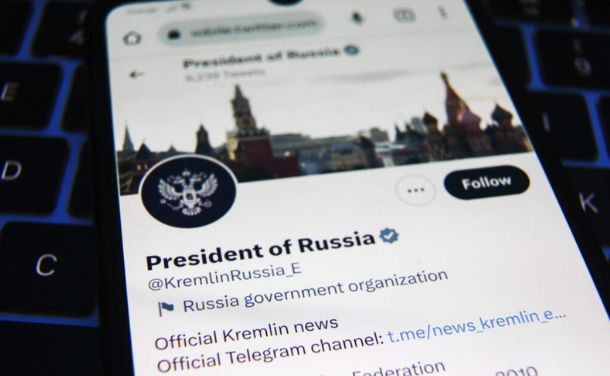
A particular medium for hybrid warfare that Russia has instrumentalized is social media platforms and public internet domains. People all over the world use social media and the wider internet as sources for current affairs, and the exchange of information is easier than ever in this stage of interoperability. The benign use of public domains for sharing information is not hybrid warfare, but the intentional spread of disinformation about a conflict or topic can be. Russia has continuously utilized social media platforms to manipulate rhetoric about its actions in Ukraine. Within this revolutionized battlefield, one that relies on a cognitive approach, the internet is Russia’s weapon for influence.
The EU’s Disinformation Lab uncovered one of Russia’s most large-scale disinformation campaigns in 2024, DoppelGänger. Russia produced fake websites that mimicked seventeen media outlets. For example, a fake North Atlantic Treaty Organization (NATO) website was created to spread disinformation about defense budget proposals and military deployments. The overarching themes presented in the fake websites through DoppelGänger predominantly promoted Russia’s influence in Ukraine, going as far as to deny the Bucha massacre in 2022 where almost 500 Ukrainians were killed by Russian troops [2]. Other forms of social media have also been intentionally tampered with to manipulate public narrative. In 2025, the Atlantic Council conducted an investigation on one of Eastern Europe’s most used social network sites, Telegram. After using a pool of 2.9 million posted comments on information forums in Ukraine, about 96,000 comments were flagged as coming from bots, or automated software that mimics human activity. The top three narratives spread by these bots: criticism over a sovereign Ukraine, criticism over Ukrainian President Volodymyr Zelenskyy, and criticism over the West [3].
Russia’s disinformation ecosystem, one that aims to influence a Western audience and its own communities of Russians, relies on maneuvering public rhetoric towards greater acceptance of its political strategies. Additionally, propaganda that continuously targets the credibility of democratically-aligned institutions exacerbates an “us vs. them” sentiment between Russia and the West. The Baltic States (Latvia, Lithuania, and Estonia), Western-aligned countries that contain populations of ethnic Russians, have become a popular front for the disinformation campaign.
Russian Disinformation in the Baltics
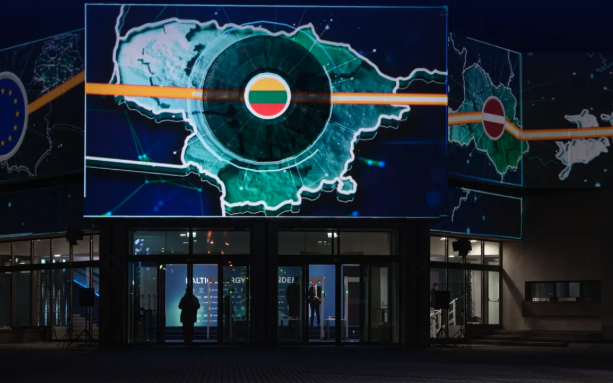
At the forefront of NATO’s Eastern flank, the Baltic states are susceptible to multiple forms of Russian hybrid warfare for proximity alone. Additionally, the Baltic States are a strategic opportunity for Russian power projection due to their alignment with Western institutions. NATO, the EU, and Western influence is essentially sitting at Russia’s front door, and the spread of disinformation into these environments can potentially destabilize institutional integrity.
Russians in the Baltics have access to certain Russian media platforms that have historically spread disinformation for foreign audiences. For example, Telegram has a large Russian audience throughout the region, and there are specific channels that primarily pertain to Russian interests. Baltic Bridge and Shadow of the Baltics are two examples. Baltic Bridge focuses on content relating to the maintenance of Russian and Soviet narratives in the region, regularly circulating photos and videos about the Soviet occupation of the Baltic States. This type of media aims to glorify the Soviet Union and preserve memory of the past, a tactic often deployed within Russia’s disinformation campaign. Shadow of the Baltics releases content to challenge alleged mistreatment and discrimination of Russians in the region, regularly accusing the Baltic governments of “Russophobic” acts [4].
Telegram has also been used recently to spread disinformation about Ukrainian drones that crashed in the Baltics on March 23, 2026. A Telegram post by MASH, a popular Russian news outlet, falsely claimed that the Baltic States had opened their airspace to Ukrainian drones. This piece of disinformation that started on Telegram made its way onto Russian state news channel 60 Minutes, with Russia accusing the Baltics of allowing their airspace to aid in Ukrainian attacks on Russian territory. After more Ukrainian drones crashed in Latvia and Lithuania in late May, Russia has continued to mobilize the false accusation of the Baltic States’ role in Ukrainian drone operations against Russia [5]. This recent development within Russia’s disinformation campaign has caused heightened tensions across the region, and such narratives frame the Baltics as active participants in the conflict. As a result, mistrust is exacerbated between Russia and the Baltics, and disinformation can potentially legitimize hostile rhetoric or retaliatory measures.
Safeguarding Against Russian Disinformation in the Baltics
The Baltic States understand the severity of Russian disinformation, and there are certain initiatives underway to combat the spread of propaganda and false narratives. The most mobilized effort for the reduction of Russian disinformation is restrictions placed on Russian media outlets. Since 2014, the Baltics have banned multiple Russian television channels that have contributed towards Russia’s disinformation campaign, including popular Russian Today (RT), Mir24, and RBK TV. The Russian TV channels were a fundamental gateway for Kremlin-backed biases and propaganda to enter the Baltic States. However, restricting Russian media has had adverse consequences for the Baltics, ranging from general ineffectiveness to heightened allegations of media suppression.
Though the restrictions placed on Russian TV networks appeared to decrease the flow of Russian disinformation into the security atmosphere of the Baltics, Russia has been able to instrumentalize social media platforms like Telegram and Facebook in order to continue reaching a Baltic audience. Active Telegram channels such as Antifascists of the Baltics regularly post Russian-backed content, and Facebook pages with over 100,000 followers like Russian-Speaking Estonia bring together a large community of Russians through use of pro-Russian narratives. The Baltic States are unlikely to ban popular social media platforms. Doing so might stimulate backlash regarding media rights and freedom of expression, therefore Russia’s information campaign still has operational fluidity despite the lack of Russian TV channels in the region. The use of social media also has more strategic advantages for the campaign than state TV channels, as it can reach larger audiences of social groups with an added level of deniability for disinformation. With social media being an active route for Russian hybrid warfare in the Baltics, one that will most likely persist, a more cognitive approach to countering disinformation has been increasingly utilized.
An important aspect of disinformation, and information gathering in general, is that it is difficult to altogether alter a person’s opinion over information due to pre-existing cognitive biases. Additionally, restricting information that already exists and is circulating does not help with combatting disinformation at a cognitive level [6]. Rather focusing on information restrictions, the states have shifted towards a whole-of-society approach for increasing education and awareness over disinformation. Media literacy on Russian disinformation and identifying disinformation in general encourages people to understand their own cognitive shortcomings surrounding the content they choose to believe. The Baltics are instrumentalizing media literacy and disinformation awareness on multiple fronts. The NATO Strategic Communications Centre of Excellence regularly releases new reports on routes for disinformation to spread into spheres of national security, including the use of social media and other public domains. Additionally, the Latvian Transatlantic Organization (LATO) facilitates workshops in multiple public spheres, including education systems and corporate settings, on media literacy and identifying disinformation. This movement is particularly effective, as it encourages everyday citizens to grow their awareness over biases within the information they digest [7]. Altering perspectives of disinformation through education and media literacy could be an effective way for combatting Russia’s disinformation campaign in the Baltics, especially in a current technological age where social media will continue to reach global audiences.
Russia’s disinformation campaign is a dangerous form of hybrid warfare. When pro-Russian rhetoric is given a platform to spread, false narratives over geopolitical conflicts can exacerbate tensions and polarize societies. The Baltic States, due to regional proximity to Russia and their multiethnic societies, are a strategic target for Russian disinformation and propaganda. Continuous efforts on behalf of the Baltic States to combat the spread of Russia’s information war is vital for the national security and internal stability of the region, and diversified efforts that promote societal awareness over media literacy should not be disregarded during this fight.
[1] The U.S. Department of State. GEC Special Report: Russia’s Pillars of Disinformation and Propaganda. 2017-2021
https://2017-2021.state.gov/russias-pillars-of-disinformation-and-propaganda-report/
[2] U.S. Cyber Command. Russian Disinformation Campaign “DoppelGanger” Unmasked: A Web of Deception. 2024.
https://www.cybercom.mil/Media/News/Article/3895345/russian-disinformation-campaign-doppelgnger-unmasked-a-web-of-deception/
[3] Dukach, Yuliia, Adam, Iryna, Furbish, Meredith. Digital occupation: Pro-Russian bot networks target Ukraine’s occupied territories on Telegram. The Atlantic Council. 2025. https://www.atlanticcouncil.org/in-depth-research-reports/report/report-russian-bot-networks-occupied-ukraine/
[4] Springe, Inga. With Wit and Spice: How Moscow Uses Telegram to Target the Baltic Russians. Re:Baltica. June 3, 2025.
https://en.rebaltica.lv/2025/06/with-wit-and-spice-how-moscow-uses-telegram-to-target-the-baltic-russians/
[5] Re:Baltica. How Russian Propaganda Created the Tale of Baltic’s Opening the Skies to Ukrainian Drones. European Digital Media Observatory. April 9, 2026.
https://edmo.eu/publications/how-russian-propaganda-created-the-tale-of-baltics-opening-the-skies-to-ukrainian-drones/
[6] Flynn, D.J., Nyhan, B. and Reifler, J. (2017), The Nature and Origins of Misperceptions: Understanding False and Unsupported Beliefs About Politics. Advances in Political Psychology, 38: 127-150. https://doi.org/10.1111/pops.12394
The Use of Social Media for Russian Disinformation in the Baltics
[7] Latvian Transatlantic Organization. Empowering Rural Voices: A Media Literacy Project for Informed Communities. 2025.
https://www.lato.lv/empowering-rural-voices-a-media-literacy-project-for-informed-communities/