
The Baltic Sentry: NATO Effort to Deter Russia’s “Shadow Fleet” in the Baltic Sea
By Vienne Abrahamian
Amid heightened geopolitical tensions in the region, Estonia, Latvia, and Lithuania remain firmly committed towards upholding North Atlantic Treaty Organization (NATO) values with active participation in international cooperative security efforts. This is demonstrated through the Baltic Sentry, a joint NATO defense initiative to promote enhanced security, deterrence, and military mobilization in the Baltic Sea. NATO’s interest in securing the Baltic Sea arose after multiple instances of detrimental damages to underwater cables that connect the Baltic states to Northern and Central Europe through critical links in energy and data infrastructure. The damages to undersea cables have generated discussion over the real and persistent threat caused by Russia’s “shadow fleet”, often old, unidentifiable ships that Russia utilizes in order to carry out oil transportation in the Baltic Sea. The fleet has been accredited to causing surmountable damages to infrastructure in the Baltic Sea that increases susceptibility to more forms of hybrid threats. The Baltic Sentry represents a necessary joint initiative to ensure that the Baltic region can remain a secure and stable environment in a time of heightened maritime tensions. The effort to dismantle Russia’s ability to impact Baltic security architecture signifies NATO’s interest in curbing Russian influence over the region, and a positive U.S. posture towards the Baltic Sentry program aligns with NATO and American security interests in the Baltic region.
Russia’s Influence in the Baltic Sea
Though Russia’s hybrid warfare campaign in the Baltic Sea has grown more prominent since its invasion of Ukraine in 2022, its overall presence in the region is longstanding. Skrunda, one of the last Soviet military installations in Latvia, was shut down in 1998, signaling a major disruption to strategic Russian military influence in the Baltic Sea. Despite Russia losing its radar stations and comprehensive military leverage in the Baltic Sea, it has been able to continuously exert influence through use of the Kaliningrad Oblast to maintain political leverage over regional security and energy initiatives. Russia’s former Western Military District (WMD) was shut down in early 2024 and replaced by the Leningrad and Moscow Military Districts, placing the Leningrad MD at the forefront of the Baltic states and Northern Europe. Due to its proximity to the Baltic Sea in northwestern Russia, the Leningrad MD is a notable operational theater in the event of a conflict in the Baltic Sea region, despite the district not being exclusively tied to the Baltic Sea alone.
Additionally, the Leningrad MD spans to include Russia’s Kaliningrad Oblast, semi-exclave in the southeastern coast of the Baltic Sea. Russia maintains heavy military force in the Kaliningrad Oblast, integrating Iskander missiles, S-400, and the Baltic Fleet into a consolidated military front that has the potential to rapidly respond to NATO movements in the Baltic Sea. The Baltic Fleet is a notable asset in itself, currently equipped with one attack submarine and around 53 warships that are operated out of the Kaliningrad exclave. The fleet allows Russia to maintain influence in the Baltic Sea, though under constrained conditions due to NATO’s dominance in the region. Nonetheless, the Baltic Fleet reinforces Russia’s ability to protect its undersea infrastructure, as well as monitor NATO naval movements in an effort to counter the imbalance that occurs due to the overwhelming presence of NATO-aligned states in the region.
A major factor that has allowed Russia to threaten stability in the Baltic Sea is its reliance on illegal and covert operations, including the use of a “shadow fleet” of unregistered vessels engaged in maritime movements to evade sanctions. In December of 2022, G7 states imposed sanctions on Russia that required Western companies to verify that Russian oil operations were aligned with certain limitations set on oil shipping. In response, Russia mobilized a new approach towards oil exports to ensure that operations could be maintained: a fleet of old, fraudulent ships. For example, Russia has utilized flags of convenience to appear as non-Russian, and the ships are often from Western companies to deceive ownership. Additionally, geolocating and identification technologies are dissolved to restrict foreign tracking. The physical state of the fleet is poor, and ambiguous ownership can make it difficult to identify Russian operations.
For Russia, the fleet is necessary for maintaining economic stability through oil operations. Western sanctions and price caps on oil exports have caused Russia to lose over $120 billion since 2022 according to the Kyiv School of Economics, and many countries continue to rely on Russia for oil imports such as India and Turkey. It also serves as a strategic mechanism for balancing power against the West. The fleet remains a prominent entity in Western-dominated Baltic waters, and Russia is effectively able to work around the imposed sanctions. The economic and psychological impact of Russian presence in the Baltic Sea supports the strategic edge for Russian influence in the region.
The “shadow fleet” has had adverse consequences on the Baltic Sea that go beyond disobedience towards Western sanctions: the fleet has been accused of causing security and environmental damages that are detrimental for the stability of the Baltics. There have been multiple reports of the “shadow fleet” severing undersea critical infrastructure in the Baltic Sea, such as energy cables and gas pipelines that are necessary for maintaining communication and energy operations throughout the Baltic states and Northern Europe.
In one instance, the Estlink 2 cable between Estonia and Finland, as well as four additional data cables, were severely damaged by a dragging anchor of an Eagle S oil tanker. Russia has since denied that the oil tanker was its own. Additionally, Latvia and Sweden experienced damages to an undersea cable in January of 2025 by a Bulgarian vessel that had been coming from Russia. One of the latest apprehensions of a Russian vessel occurred on December 30, 2025 when Finland stopped a cargo ship that came from Russia on the way to Israel. The vessel had severed underwater telecom cables that connected Finland to Estonia. All instances highlight the dangers imposed by aged and unidentifiable Russian vessels in the Baltic Sea, as the “shadow fleet’s” covert movements increase the risk of sabotage to critical undersea infrastructure that connect the Baltic states and its Northern European allies.
Baltic Sea Security Efforts
Damages to underwater cables and other critical infrastructure in the Baltic Sea pose immediate threats to the security initiatives of the Baltic States and Northern Europe, and undersea cables are heavily relied upon to maintain power supplies and communication networks throughout the region. Estlink 2, for example, allows Finland and Estonia to share a secure electricity supply that powers a large portion of the Baltic energy grid. Fibre optic cables between Latvia and Sweden allow for the consistent sharing of data and telecommunications between the Baltics and Northern Europe. Any act of sabotage towards these cables can disrupt the sharing of information between the two regions, also threatening the energy and power systems that fuel the respective countries.
In an effort to deter illegal naval movements in the Baltic Sea, NATO launched its Baltic Sentry program, an initiative proposed on January 14, 2025 at the Summit of Baltic Sea Allies. The initiative aims to mitigate security threats in the Baltic Sea by increasing NATO military presence through warships and aerial activities such as the use of drones and other surveillance aircraft. The Security General of NATO, Mark Rutte, clarified the importance of enhanced NATO presence in the region by pointing out that undersea cables in the Baltic Sea allow for around 95% of internet traffic to be obtained between countries, and obstruction to this infrastructure threatens the ability for European data transmissions. The initiative also establishes direct partnerships with NATO’s Maritime Center for Security of Critical Undersea Infrastructure and the Critical Undersea Infrastructure Network, ensuring the Baltic Sea can maintain secure undersea cables. This is a vital partnership, as the Baltic region hosts multiple important transcontinental cables that allow for continuous communication and data connection between Eastern Europe and Northern Europe.
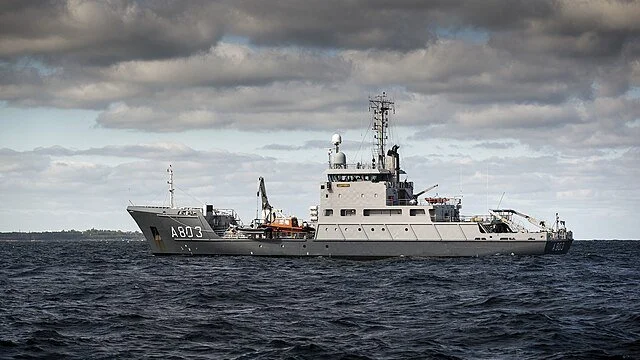
A803 of the Royal Netherlands Navy is a participant in NATO's Baltic Sentry Mission.
The joint declaration that was provided at the summit directly mentions Russia’s “shadow fleet” and how it poses an immediate threat to the security of the Baltic Sea and the integrity of undersea infrastructure. In order to mitigate the consequences of illegal maritime movements, the declaration confirms that the Baltic states and Northern European allies have the authority to interfere with activity in the Baltic Sea that challenge established sanctions set on Russia. In doing so, vessels will be increasingly subject to routine certification checks and heightened surveillance to ensure that maritime activities can remain aligned with the security of the Baltic region. NATO’s Baltic Sentry program symbolizes a necessary push for enhanced Baltic security, and a greater military presence deters acts of aggression while strengthening regional defense capabilities. The Baltic Sea can potentially serve as a strategic gateway for reinforcing NATO’s eastern flank in a time of heightened geopolitical tensions.
Despite evident collective interest on behalf of NATO to interfere with Russia’s “shadow fleet”, the Baltic Sentry program contains structural limitations that undermine the functionality of the initiative. For instance, after Finland successfully halted operations of the Eagle S oil tanker that severed its underwater cables, the ship was ultimately released. Additionally, Finland or any other European Union member state does not have the ability to dictate maritime operations of Russia outside of EU territorial waters, so the “shadow fleet” is still awarded international maritime safeguards regarding exploration. Definitive violations of maritime movements have historically been difficult to navigate, and the Baltic Sentry program is not free from the constraints of international maritime laws. Therefore, legal ambiguity can be exploited to carry out hybrid warfare, a tactic that Russia has successfully utilized to carry out its own strategic interests in the Baltic Sea.
Incidents where Russian vessels accused of defying Western sanctions are detained but ultimately released can undermine the validity of the Baltic Sentry program. In an effort to support NATO’s effectiveness in securing the Baltic Sea, it may be beneficial to frame the program for its role in deterrence rather than a punitive force. Operating through the limitations of international maritime law, the Baltic Sentry is undeniably limited in unilateral seizure and detention. However, NATO deterrence and interference still allows for increased scrutiny and exposure to Russia’s illegal oil operations, and hybrid warfare mechanisms are becoming increasingly unveiled. Though the Baltic Sentry Program is limited in its ability to completely dismantle the “shadow fleet”, Russia does lose a significant amount of operational freedom in the Baltic Sea.
The Role of the United States in Baltic Sea Security
Russia’s destruction of undersea infrastructure in the Baltic Sea poses a threat on the entire security structure of NATO. The increase of hybrid warfare tactics is undoubtedly alarming for the Baltic states and their communication and energy security; however, hybrid warfare in general signals to the global community that Russia is willing to use acts of sabotage in pursuit of strategic influence beyond the immediate region. Russia’s “shadow fleet”, therefore, symbolizes a disruption to conventional warfare tactics, and modes of hybrid warfare will only increase.
The United States has taken steps to support the Baltic Sentry initiative in two main ways, with contributions of military aid and the discussions of sanctions against Russia. In the early stages of the joint operation, the United States sent U.S. Navy Poseidon warplanes to Norway to support the surveillance efforts in the Baltic Sea. In addition to this, the 2025 Shadow Fleet Sanctions Act was proposed to support deterrence against Russia’s illegal maritime movements in the Baltic Sea. The proposition focuses predominantly on Russia’s deliberate acts of deception to continue crude oil shipment through the Baltic Sea, but it also specifically mentions any acts of sabotage conducted by the fleet during such maneuvers. In summary, the act aims to impose sanctions over Russia’s “shadow fleet” if the amount of crude oil being shipped is above the price cap set by previous sanctions, if vessels are intentionally tampered with to appear ambiguous or unidentifiable, or if the poor state of vessels cause deliberate or unintentional damage to undersea infrastructure. The deployment of warplanes to the Baltic Sea and discussions about sanctions over the "shadow fleet” are important contributions made by the United States, and aiding the Baltic Sentry initiative signifies a form of risk management towards a region of increased geopolitical tensions.
The United States has strategic incentives to support NATO’s Baltic Sentry program and secure the Baltic Sea. The Baltic states are at the forefront of NATO’s eastern flank against Russia, and the United States plays a role in deterrence and collective defense efforts that highlight strong alliance cohesion in a time of heightened threats. In a broader sense, U.S. intervention in hybrid warfare tactics is a preventive measure to ensure that Russian acts of sabotage, disinformation, and deception do not go unchecked. Though military deployment and sanctions may appear as short-term tactics against Russian hybrid warfare, they manifest into long-term international stability and global security. A secure Baltic region and Baltic Sea ensures international norms are maintained, and the United States can be a key contributor towards upholding this.
Ensuring Long-Term Stability in the Baltic Sea
Russia’s full-scale invasion of Ukraine has stimulated a rise of hybrid warfare mechanisms that stretch beyond conventional modes of war. In an effort to continue maritime movements in the Baltic Sea, Russia has begun employing a “shadow fleet” of unidentifiable vessels that have caused detrimental damages to undersea cables in the Baltic Sea. When the structural integrity of undersea cables are threatened, the Baltic states and Northern Europe experience disruptions to communication, energy, and data systems that are vital for the security of these states. The Baltic Sentry program has opened up the potential for NATO to interfere with illegal maritime movements on behalf of Russia, and increased military presence and surveillance is a necessary form of deterrence against Russian hybrid warfare. The United States has shown its willingness to offer military and economic support for the NATO initiative, and the incentives towards ongoing support for Baltic Sea security are vast. U.S.-NATO collaborative efforts for Baltic stability symbolize a wider goal of global security, and a cohesive alliance of defense and deterrence is necessary during increased times of Russian aggression.
References
Heinrich Brauß. Russia’s Strategic Interests and Actions in the Baltic Region. German Council on Foreign Relations. DGAP Report. Jan. 7, 2021. 2 2 https://dgap.org/en/research/publications/russias-strategic-interests-and-actions-baltic-region
Luzin, Pavel. Russia Reorganizes Military Districts. The Jamestown Foundation. Eurasia Daily Monitor, vol.21, issue 32. Feb. 29, 2024. https://jamestown.org/program/russia-reorganizes-military-districts/#:~:text=On%20March%201%2C%20the%20Leningrad,the%20occupied%20territories%20of%20Ukraine
Russian Ships. Info. Russian Navy 2025: List of Active Navy Ships. https://russianships.info/eng/today/
Brookings. Where did Russia’s Shadow fleet come from? https://www.brookings.edu/articles/where-did-russias-shadow-fleet-come-from/
Kyiv School of Economics. Russian Oil Revenues Decline Despite Active Shadow Fleet and Higher Oil Prices. https://kse.ua/about-the-school/news/russian-oil-revenues-decline-despite-active-shadow-fleet-and-higher-oil-prices/
Borger, Julian. NATO flotilla assembles off Estonia to protect undersea cables in the Baltic Sea. The Guardian. https://www.theguardian.com/world/2025/jan/19/nato-flotilla-assembles-off-estonia-protect-undersea-cables-baltic-sea
Reid Standish. Baltic Sea incidents Put Spotlight on Russia’s Shadow Fleet. Radio Free Europe Radio Liberty. Jan. 29, 2025. https://www.rferl.org/a/baltic-sea-sabotage-undersea-cables-russian-shadow-fleet/33290689.html
Lehto, Essi, Kauranen, Anne. Finland seizes ship sailing from Russia after suspected cable sabotage in the Baltic Sea. Reuters. Dec. 31, 2025. https://www.reuters.com/world/finland-suspects-ship-causing-undersea-cable-damage-president-says-2025-12-31/
Nordic Investment Bank. Estlink-2 to tie Baltic power produces closer to the Nordic markets. 9.12.2010. https://www.nib.int/articles/estlink-2-to-tie-baltic-power-producers-closer-to-the-nordic-markets
NATO. Nato launches ‘Baltic Sentry’ to increase critical infrastructure security. 14 January 2025. https://www.nato.int/cps/en/natohq/news_232122.htm
Laura Gozzi. Nato launches new mission to protect crucial undersea cables. BBC. 14 January 2025. https://www.bbc.com/news/articles/c4gx74d06ywo
Tasavallan Presidentti. Joint Statement of the Baltic Sea NATO Allies Summit. 14 January 2025. https://www.presidentti.fi/joint-statement-of-the-baltic-sea-nato-allies-summit/
The Watch. U.S. deploys P-8 Poseidons to Norway to bolster Baltic Sentry. Oct. 30, 2025. https://thewatch-journal.com/2025/10/30/u-s-deploys-p-8-poseidons-to-norway-to-bolster-baltic-sentry/#:~:text=The%20transatlantic%20alliance%20launched%20Baltic%20Sentry%20earlier,in%20the%20region%20in%202024%2C%20including%20Russian%2D
U.S. Congress. S.2904 Shadow Fleet Sanctions Act. 119th congress. 2025. https://www.congress.gov/bill/119th-congress/senate-bill/2904/text#toc-id3b851ddfdd98481099591c95ad3cb7a